
-1.png?width=300&height=86&name=Axiom_Wordmark+Symbol_BlueRGB%20(1)-1.png "Axiom_Wordmark+Symbol_BlueRGB (1)-1")
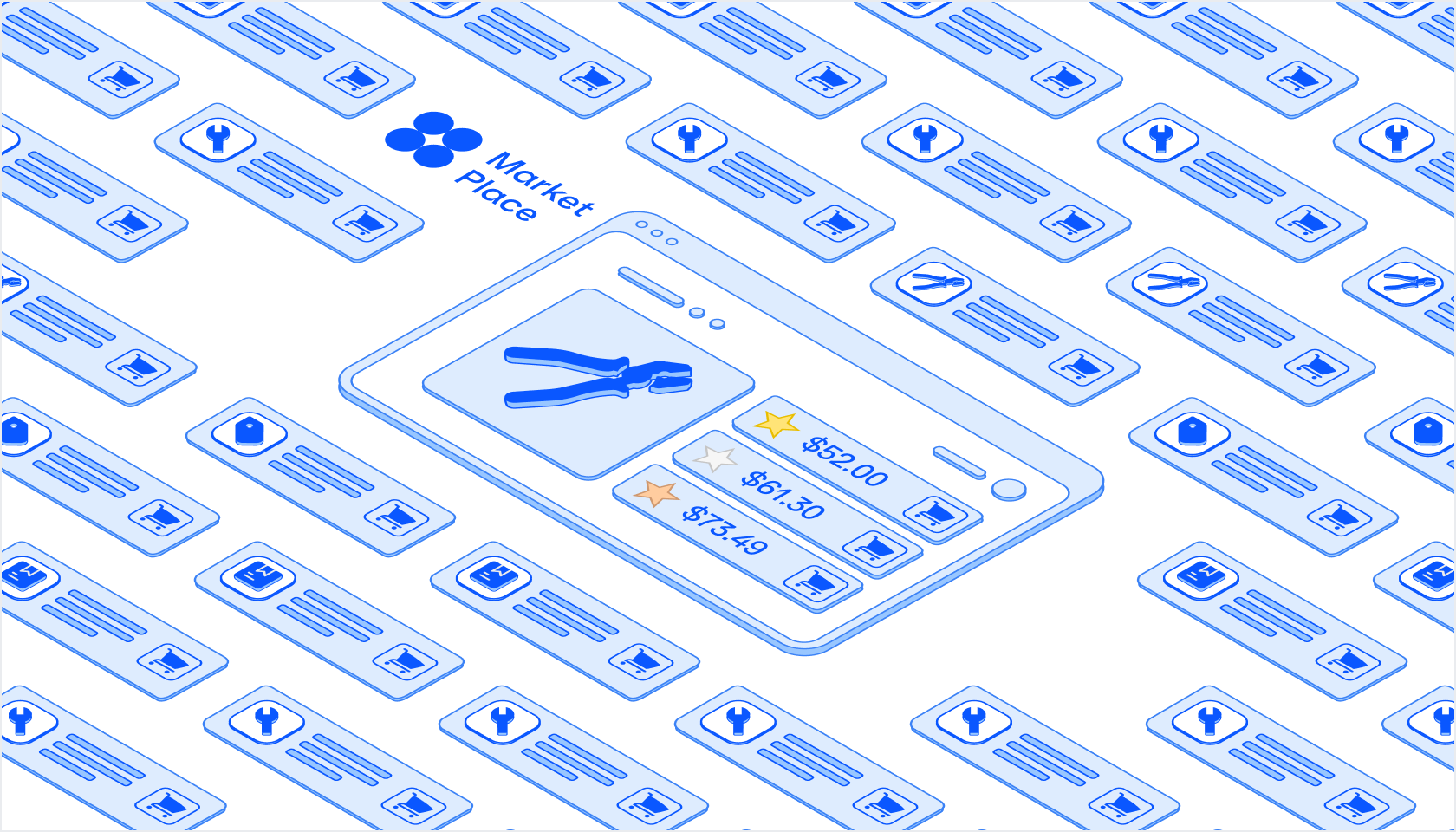
Procurement either managed the content behind the scenes through hosted catalogs, or suppliers provided access to punchout catalogs.
The buyer journey was predictable.
Search one supplier’s catalog. Find nothing. Move to another supplier. Search again. Compare prices, availability and lead times manually. Repeat until the buyer either found what they needed or gave up and submitted a free-text request.
Behind the scenes, Procurement was left managing pricing changes, supplier updates, content quality and the fallout when a product or service changed after it had been added to the system.
It was a difficult experience for everyone: buyers, Procurement, suppliers and Finance.
And that is what many organisations still "proudly" describe as their catalog management programme...
The catalog is not dead. The old model is.
They are built around the supplier.
The future is built around the item, service or buying decision.
A buyer should not need to know which supplier’s catalog contains what they need. They should not have to move between tiles, supplier websites or disconnected product records. They should be able to search once and see the relevant options in one place.
That result might include eight approved suppliers, each with different prices, availability, lead times and product information.
The supplier network remains broad. The buying experience becomes simple.
The buyer sees one decision. Procurement sees the competition behind it.
That is the shift from catalog management to curated content.
Hosted, punchout, Level 1 and Level 2: the old debate
Which model creates the least administration? Which gives buyers the easiest route to purchase? Which keeps supplier data most up to date?
These questions were useful when the primary challenge was how to connect a supplier to an S2P system.
They are less useful now.
The bigger question is: How do we create the best buying experience across the entire supply base, regardless of where the underlying supplier data comes from?
Hosted catalogs put much of the content burden on Procurement. Supplier data is uploaded into the S2P system, but the buying organisation is often responsible for keeping prices, availability and product information current.
Punchout catalogs move more responsibility back to suppliers. That can be valuable for complex or frequently changing product ranges, but it also sends buyers away from the main buying environment and into individual supplier websites.
Level 1 and Level 2 punchouts are different technical approaches to the same underlying model. The supplier remains the primary destination, and the buyer still has to navigate a fragmented set of catalog experiences.
These approaches still have a role. Punchouts can be appropriate for highly configurable products, custom-engineered goods or purchases that genuinely require an external configuration experience.
But they should be part of a broader content strategy, not the strategy itself.
The old model forces a choice between administrative burden and buyer friction. Either Procurement manages the content, or the buyer manages the complexity.
That is no longer good enough.
Stop reducing suppliers to make catalogs easier to manage
An organisation starts with one or two preferred suppliers in a category such as MRO. This gives Procurement more control, but buyers quickly discover that the available choice is limited.
More suppliers are added. Two become ten. Ten become forty.
The intention is to improve choice and competition. The result is often catalog chaos. Buyers cannot search across suppliers, compare products in context or see the best available option in one place. Category managers inherit more supplier relationships and a growing administrative burden.
Eventually, Procurement reduces the supplier list again because it has become too difficult to manage.
The organisation has made the catalog simpler, but it has also reduced choice, competition and potentially pricing leverage.
The problem was never the number of suppliers on its own.
The problem was treating every supplier catalog as a separate destination.
The answer is not to eliminate supplier options. The answer is to manage those options intelligently.
Lots of supplier options. One coherent product view.
In the old model, the buyer searches Supplier One’s catalog, then Supplier Two’s catalog, then another supplier catalog.
In a curated content model, the buyer searches for the wrench once.
The platform brings together the relevant options from approved suppliers and presents them in context, including price, availability, lead time, product specifications and applicable procurement rules.
Many supplier options become one coherent product view.
The buyer doesn't need to think about which catalog contains the item. The platform manages that complexity in the background.
This gives Procurement the best of both worlds. Buyers get a simple experience, while the organisation retains access to a wider supplier base and makes better use of competition.
The goal is not to reduce the number of suppliers because they are difficult to administer. The goal is to make the supplier network easier to manage and more valuable to the organisation.
Content + context = intelligence
Content tells the organisation what exists. Context explains what that content means and what should happen next.
A product record is content.
But content becomes useful when it is connected to the context around a decision:
Which supplier is preferred?
Which policy applies?
Is the product already in inventory?
Is there a contracted price?
Is an alternative available?
What happened the last time the organisation bought something similar?
That's the difference between having more data and creating procurement intelligence.
Content without context is information. Content with context becomes intelligence.
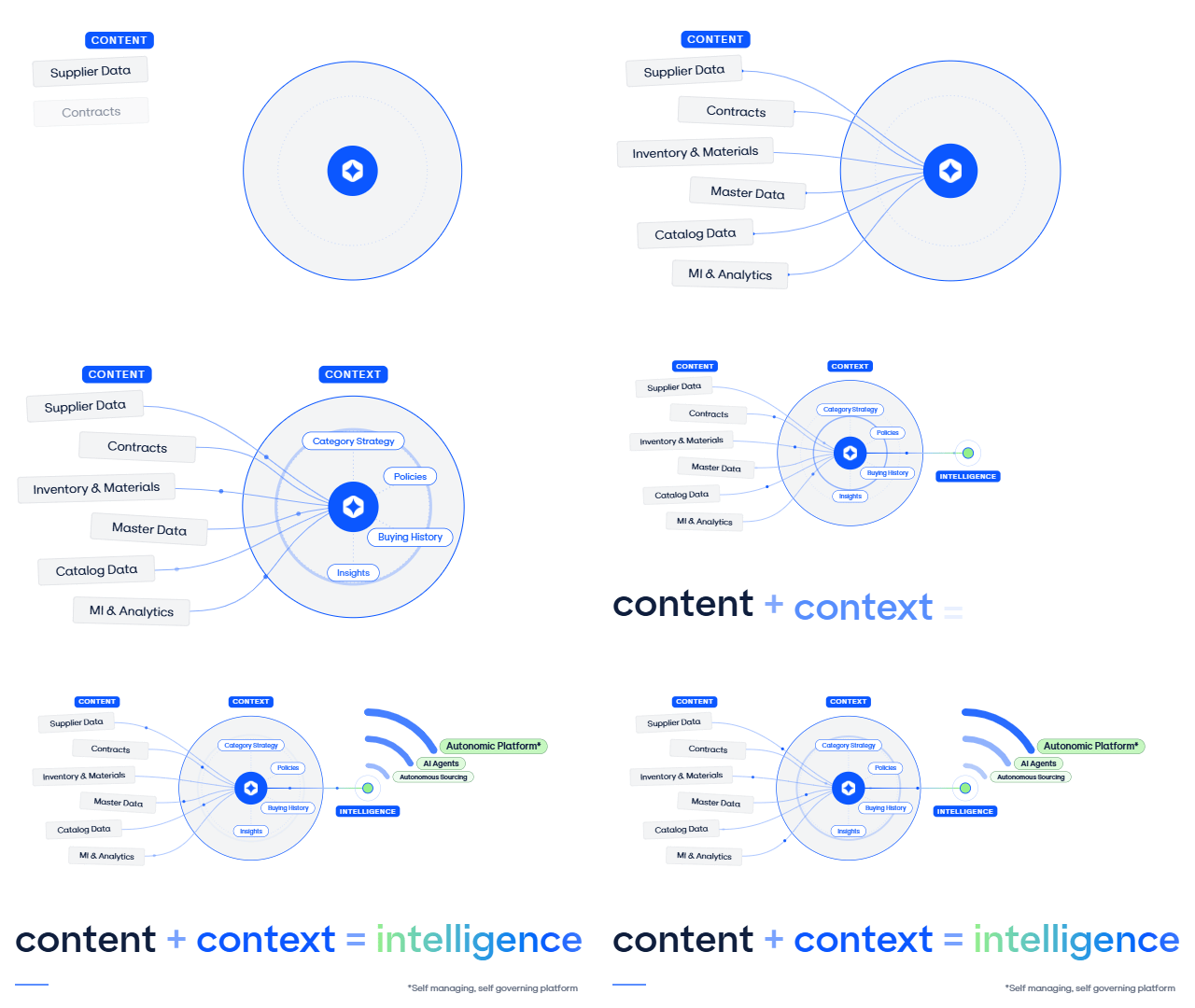
Supplier product and service data can be connected through 5 uploading methods. The platform then manages the complexity of bringing that information together into a searchable environment across the organisation’s approved supply base.
The focus is no longer on the catalog as an individual supplier asset.
It's on the content associated with the product or service, and the decision the buyer needs to make.
That content can be enriched over time through searches, sourcing events, inventory signals and completed transactions.
This is not simply content management.
It's a content engine connected to the buying process.
It can support search, comparison, sourcing, buying, inventory, pricing, policy and insight. It can also help Procurement understand where demand is emerging, where supplier options are missing and where a sourcing event could create value.
The result is not just a better catalog.
It's a more intelligent buying environment.
Catalog management is not the destination
The debate around hosted catalogs, punchouts, Level 1 and Level 2 has been useful. But it's becoming too narrow.
Those are different ways of managing supplier content within an older model. They don't answer the bigger question of how buyers should find, compare and purchase products and services across the entire supply base.
The better question is not: Which type of catalog do we have?
It's: How do we create the best content and buying experience for every product and service the business needs?
That means preserving supplier choice without creating catalog chaos. It means using technology to manage the administration that previously sat with Procurement. It means making price, availability and product information visible at the point of purchase. It means capturing the outcome of every sourcing event so the content improves over time.
The future is not a bigger collection of supplier logos.
It's curated content, connected to sourcing, inventory, pricing, policy and purchasing.
A catalog should not be somewhere a buyer goes to find a supplier.
It should be the place where the organisation understands the best way to buy.
And that is the real shift: From catalog management to procurement intelligence.